



Looking for a home is rarely a calm, single-session task. I usually begin with a broad search, narrow it by neighborhood, check several listings, compare the surrounding area, and then return later to see whether anything new has appeared. Trulia is built for that kind of repeated browsing: it is a free real estate app for Android and iOS that focuses on homes for sale or rent and the neighborhoods around them.
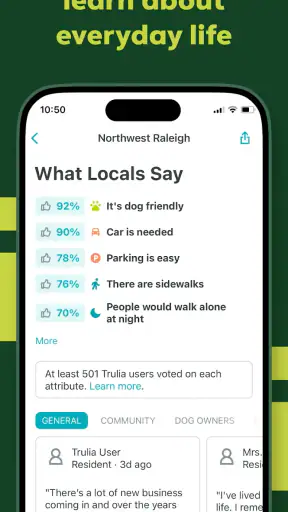
After spending time with it, I see the app as most useful during the early and middle stages of a move. It helps turn a vague idea such as “somewhere quieter but still convenient” into a more practical search. The important distinction is that the property itself is only part of the experience. Trulia, developed by Trulia and owned by ZillowGroup, puts noticeable attention on the character of an area, which can make the search feel more grounded than simply scrolling through prices and photographs.
It is not a replacement for viewing a property in person, checking official documents, or speaking with a qualified professional. Still, for everyday discovery, comparison, and keeping a search organized, I found it approachable and easy to return to. Its broad audience is reflected in an Everyone content rating, and the app is free to use.
How Trulia feels during a real home search
Quick browsing without making the search feel rushed
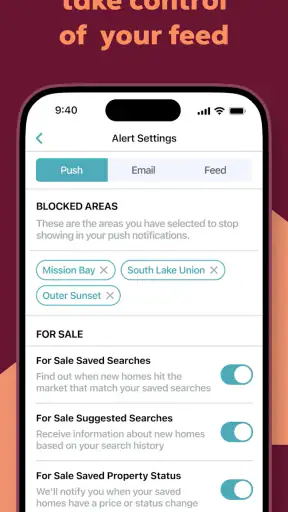
The first thing I noticed was how naturally the app supports short sessions. I can open it while commuting, scan a few homes, save the ones that deserve a closer look, and stop without losing the basic thread of my search. That matters because property hunting often happens in fragments rather than in one long sitting.
Perceived speed depends on the phone, connection, and how much information a listing needs to display, but the general experience feels suited to browsing rather than heavy productivity work. Moving between search results and individual homes is straightforward, and the app does not make me fight through a complicated setup before I can see what is available.
That simplicity is valuable when I am still deciding what I want. I can compare different parts of a city, notice how prices change from one area to another, and use the surrounding neighborhood information to challenge my first assumptions. A home that looks attractive in isolation may feel less suitable once I think about daily travel, nearby services, or the atmosphere I am actually seeking.
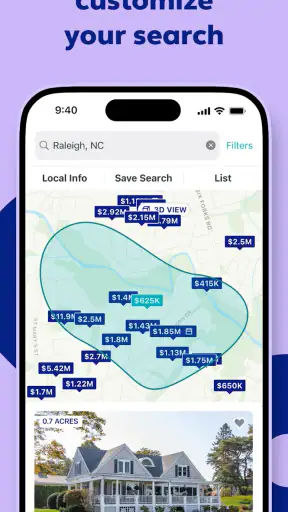
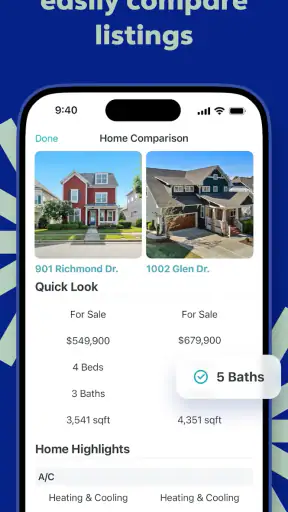
One useful habit is to begin with fewer restrictions than I think I need. If I immediately apply a very narrow combination of price, rooms, and location preferences, I may miss the broader pattern of the market. I prefer to browse a wider area first, then tighten the search after I understand what realistic options look like. Trulia works well for that exploratory stage because it encourages visual comparison instead of forcing an overly precise decision at the beginning.
What happens when I use it heavily
Real estate apps can become demanding during a serious search. I may open dozens of listings, revisit the same neighborhoods, compare rental and purchase options, and repeatedly return to saved homes. In those moments, the main challenge is not just whether the app opens quickly; it is whether the experience remains understandable when the amount of information grows.
Trulia is strongest when I treat it as a funnel. I start with discovery, save only the listings that genuinely interest me, and then use a separate note or calendar to record questions and viewing plans. Saving everything is tempting, but it quickly turns a useful shortlist into a crowded collection. The app can help me find candidates, but I still need my own method for deciding which ones deserve action.
A practical workflow is to create three mental groups: homes worth viewing, homes that are possible backups, and homes that are interesting only for market comparison. The third group is easy to overlook, yet it can be useful. A listing that I would never choose may still show what a neighborhood offers at a particular budget. That context can stop me from judging one property too quickly.
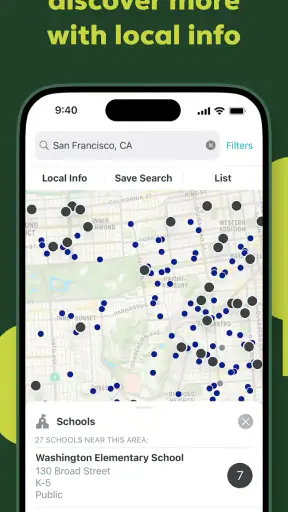
During a busy search, I also recommend opening important listings again rather than relying entirely on memory. Details blur together when several homes have similar layouts or photographs. A second look helps me separate genuine advantages from the excitement of seeing something new. I pay particular attention to the relationship between the home and its neighborhood, because that is where Trulia feels more distinctive than a basic property gallery.
There is a trade-off here. More neighborhood context can make the search more useful, but it also means I may spend longer researching an area before deciding whether a listing is worth contacting. For someone who wants only a fast price-and-photo scan, that extra layer may feel like friction. For me, it is worthwhile when the move involves a new city or an unfamiliar part of town.
Stability and recovering from interrupted searches
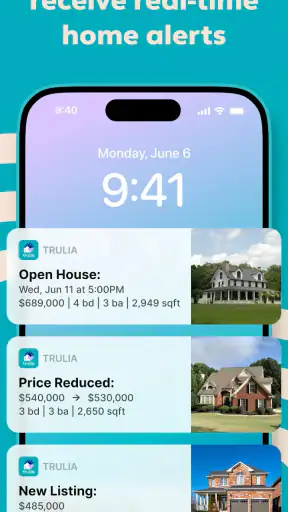
Property searches are often interrupted by phone calls, work, travel, or a sudden change of plans. I value an app that lets me return to the process without requiring me to reconstruct everything from the beginning. Trulia fits that pattern best when I use its browsing and saving tools consistently rather than treating every visit as a completely new search.
I still keep important information outside the app. A saved listing is a convenient reminder, but it should not be my only record of a viewing time, a question for an agent, or a concern about a property. My preferred approach is to save a promising home in Trulia, then write a short note elsewhere with the reason it stood out and the next action I need to take. That small step makes recovery much easier after a few days away.
The same principle applies if the app is closed unexpectedly or the connection becomes unreliable. I do not want a temporary interruption to erase my decision-making process. Keeping a shortlist and notes gives me a stable backup, while Trulia remains the place where I return to inspect current listing details and continue browsing.
In my experience, this is a sensible way to use any property app, but it is especially important here because a listing search is not the same as a finished transaction. Availability can change, homes can be updated, and a saved result should be treated as a lead rather than a guarantee. The app is reliable as a discovery tool; the final verification still belongs to the user and the people involved in the sale or rental.
Phones, operating systems, and everyday resource use
Trulia is not the kind of app I would choose to test a phone’s limits. Its role is information browsing, so I expect it to be more comfortable on a reasonably modern device than on very old hardware, especially when I move rapidly through image-heavy property pages. The stated minimum operating system is version 10, which gives users a clear baseline for compatibility.
On a normal phone, the app makes sense for quick checks, but a larger screen can be more comfortable when I want to compare several homes or study neighborhood information. A tablet or desktop browser may be preferable for a long planning session, while the mobile app is better for spontaneous searches and checking options while away from home.
Resource demands are also shaped by how intensely I use it. A short text-focused search should be modest, while extended browsing with many photographs can naturally consume more network data and battery than a simple messaging app. I avoid leaving a large search session running unnecessarily, and I use a stable connection when I am comparing several listings in succession. These are ordinary precautions, but they make the experience feel more predictable.
The app’s current version is 14.46.0, and its long presence in the category suggests that it is not a brand-new experiment. It was released on March 17, 2011, and has since become a widely used option, with over ten million installs. The store shows a 4.7 average from around 319 thousand ratings, alongside roughly 61 thousand written reviews. Those figures do not tell me whether every search will feel perfect, but they do indicate that the app has attracted a substantial, active audience.
Where it fits among the usual alternatives
When I compare Trulia with a general property marketplace, the biggest difference is emphasis. Many alternatives are built around quickly displaying inventory, while Trulia gives me more reason to investigate the neighborhood before I become attached to a particular home. That can be a major advantage for renters relocating to an unfamiliar area or buyers who care about daily surroundings as much as the building.
On the other hand, someone who already knows the exact street, building, or agent they want may prefer a more specialized source. A local agency’s own app or website may provide more direct communication for its listings, while a broader marketplace may be better for cross-checking availability across several sources. I would not use Trulia as my only reference for a high-stakes move.
The best combination, in my view, is to use Trulia for discovery and neighborhood comparison, then verify the most important details through the listing contact and other appropriate sources. This avoids two common mistakes: rejecting a good area because the first few listings look unsuitable, or assuming that a beautiful listing tells the whole story about where it is located.
Who will get the most from it
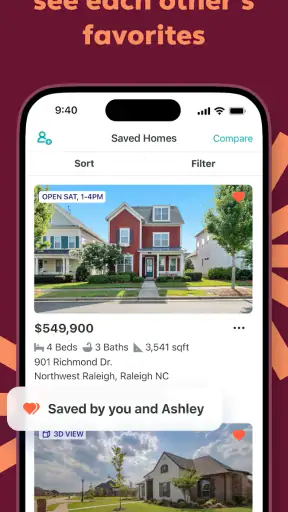
I would recommend Trulia to first-time renters, people moving to a new city, buyers who are still defining their priorities, and anyone who wants neighborhood context while browsing homes. It is also useful for couples or families who need a shared starting point for discussion. One person can focus on the home, while another pays attention to the area and practical fit.
A realistic example would be a renter with a fixed monthly budget who works in one part of a city but wants a quieter neighborhood. Instead of searching only by rent, I would use Trulia to compare several areas, save a small number of plausible homes, and look at what each neighborhood feels like before arranging viewings. The result is not a final answer, but it makes the next conversation more specific: which compromises are acceptable, and which are not?
I would be less enthusiastic about it for someone who already has a confirmed property and simply needs transaction management. It is also not the right tool for a user who expects every listing to be perfectly current or who wants a complete substitute for professional advice. The app can narrow choices, but it cannot remove the uncertainty that comes with real estate.
Small habits that make the app more useful
My first tip is to judge neighborhoods in layers. I begin with the broad feeling of an area, then consider whether the individual home still fits. This prevents me from falling in love with a property before thinking about the routine around it. A visually appealing home is not automatically a good choice if the location creates daily problems.
My second tip is to save selectively and revisit the shortlist after a cooling-off period. The first impression of a listing is often driven by photographs. Returning later helps me notice practical questions about layout, location, and whether the home actually matches my original priorities.
My third tip is to use the app as a comparison notebook, not as a decision-maker. I write down why each saved home matters, what I need to verify, and what would make me reject it. This turns passive scrolling into a repeatable process and reduces the chance that I confuse several similar listings.
Finally, I would avoid making a final choice from the app alone. I treat the information as a starting point for viewing, questions, and verification. That is not a weakness unique to Trulia; it is simply the reality of buying or renting a home. The app is most valuable when it improves the quality of those next steps.
My performance verdict
From a performance perspective, Trulia feels designed for frequent, moderate sessions rather than demanding technical work. Its strongest quality is the low effort required to return to browsing, compare homes, and think about neighborhoods. On a compatible device, I would expect it to be comfortable for everyday searches, while a larger screen remains preferable for long comparison sessions.
Its main friction comes from the nature of the task. Real estate information changes, listings require careful interpretation, and a rich search can become mentally crowded. The app cannot solve those problems by itself. I get the best results when I keep a disciplined shortlist, record follow-up questions, and use the app alongside direct verification.
Overall, I consider Trulia a strong free choice for the discovery phase of a home search. It is particularly appealing when the neighborhood matters as much as the property and when I need to explore before I know exactly what I want. If I needed a tightly focused local service or a complete transaction platform, I would look elsewhere as well. For finding possibilities, comparing areas, and building a practical shortlist, Trulia earns a place on my phone.


